newsreeljapan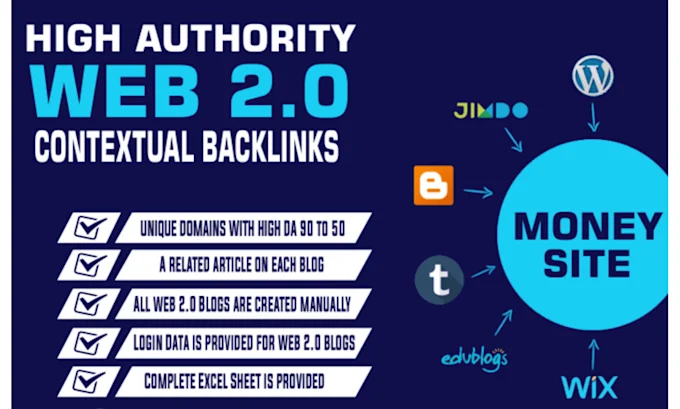
Search engines have grown sharper, stricter, and far more skeptical of manipulative link patterns. Yet despite all algorithm updates, certain legacy SEO tactics still linger in the background—mutated, refined, and repurposed by marketers who understand subtlety over scale.
The practice often referred to as web 2.0 backlinks involves creating independent publishing pages on third-party platforms and weaving contextual references back to a primary website. It’s less about raw link building today and more about constructing a believable digital footprint that mirrors organic content ecosystems.
The real challenge is no longer access—it’s authenticity.
Why This Strategy Hasn’t Disappeared
Even with modern ranking systems powered by machine learning, search engines still rely on contextual link interpretation. That means they evaluate where a link appears, how it is framed, and whether it feels editorial or forced.
When executed poorly, these pages are ignored or discounted. When executed well, they behave like quiet supporting signals within a broader authority structure.
The Safe Method to Build These Properties Without Triggering Filters
To avoid leaving obvious footprints, the approach must mimic real publishing behavior rather than mechanical link placement.
Write like a real publisher, not a link builder
Each page should stand alone as a meaningful article. If it reads like it exists only to host a link, it fails immediately.
Vary structure and tone across pages
Uniform formatting creates detectable patterns. Shift sentence rhythm, paragraph length, and narrative style.
Prioritize informational depth
Thin content is easily filtered out. Aim for layered explanations, commentary, or niche insights that feel genuinely written for readers.
Limit outbound references
One contextual citation is typically enough. Excess linking reduces trust signals.
Space out publishing activity
Rapid deployment across multiple accounts or domains can create a footprint. Slow, staggered publishing blends more naturally into the ecosystem.
High-Authority Platforms Worth Using
These platforms still hold strong indexing power and domain authority when used responsibly.
WordPress.com
A full-featured publishing environment that allows structured blogging, categorization, and long-form editorial formatting.
Blogger
A Google-operated platform that tends to get crawled quickly, making it useful for fast content discovery.
Medium
A content-focused ecosystem where well-written articles can gain traction through recommendations and engagement loops.
Tumblr
A hybrid social publishing network that blends short-form posts, visuals, and reblog-style amplification.
Wix
A website builder often used to create lightweight niche hubs that resemble independent mini-sites.
Weebly
A simple drag-and-drop system suitable for microsites, landing pages, and supporting content pages. To view a massive list of web 2 platforms to use for unlimited web 2.0 backlinks visit https://rankersparadise.com/how-to-use-web-2-0-sites-for-backlinks/.
Example of a Properly Built Link Context
Imagine a page discussing sustainable digital marketing strategies. Within a paragraph exploring content distribution, you naturally reference a deeper guide hosted on your main site.
It might look like this in concept:
A reader is exploring how brands expand visibility across multiple publishing ecosystems. Inside the discussion, a contextual reference is inserted mid-paragraph—not as an advertisement, but as an informational extension of the idea being discussed.
That subtle positioning is what separates functional execution from obvious manipulation.
Are These Still Worth the Effort?
Their role has shifted significantly.
They are no longer primary ranking engines on their own. Instead, they function as auxiliary signals that support broader SEO architecture.
Their modern value tends to come from:
Accelerating indexing for new content
Reinforcing topical relevance across related themes
Expanding brand visibility across multiple domains
However, their effectiveness depends heavily on execution quality. Low-effort setups are often ignored entirely, while carefully crafted content ecosystems can still contribute to overall authority development.
Final Takeaway
What once was treated as a shortcut has evolved into a slow, deliberate content layering strategy. Success now depends less on quantity and more on editorial realism.
When treated as part of a broader publishing strategy rather than a standalone tactic, it can still play a supporting role in modern search visibility—quiet, indirect, and heavily dependent on how convincingly it blends into the surrounding content landscape.